Trump Signs Order Preempting State AI Regulations Nationwide
Read, Watch or Listen
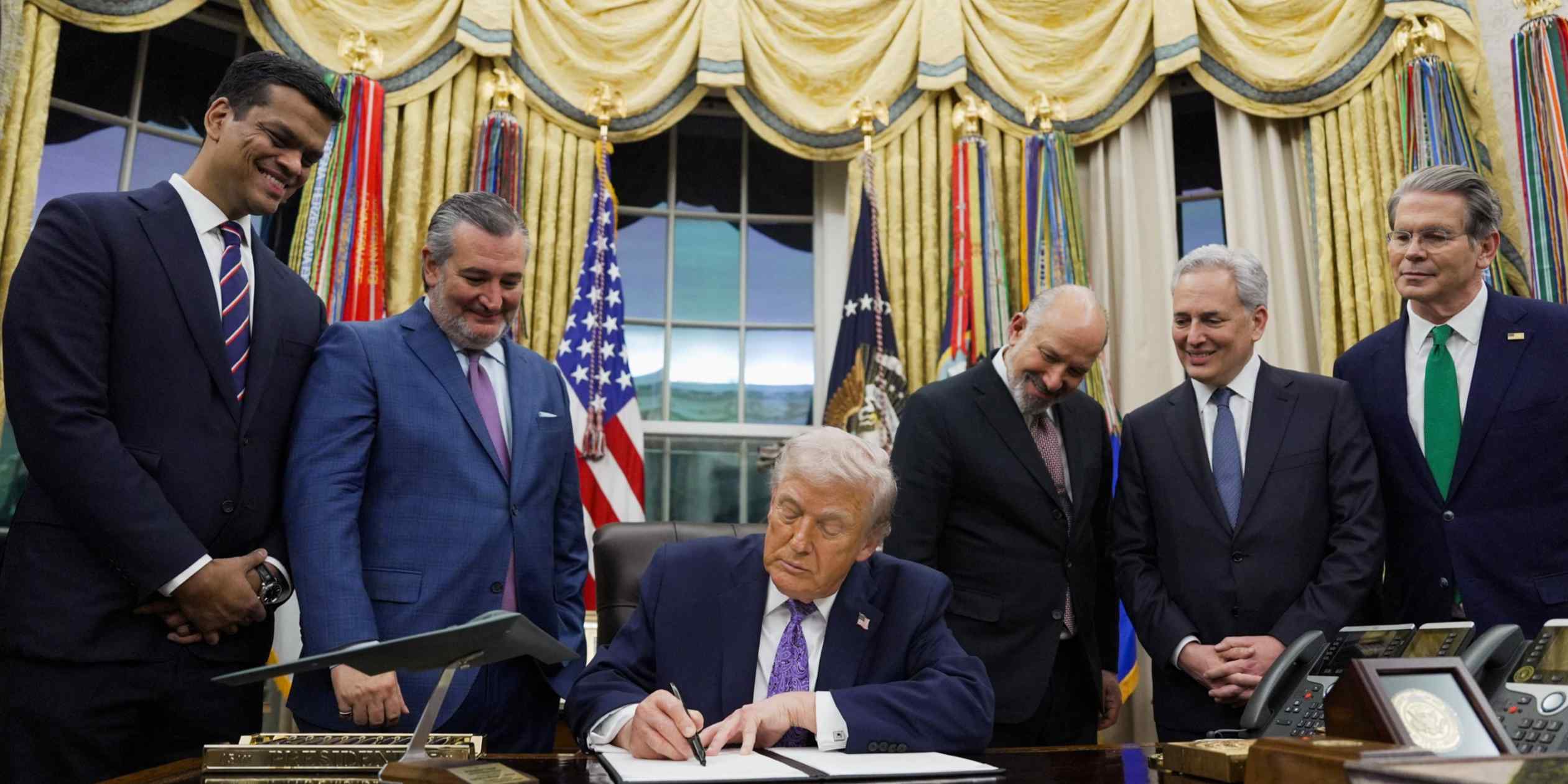
Washington — President Donald Trump on December 12 signed an executive order directing the federal government to preempt state artificial intelligence regulations and establish a unified national framework. The order instructs the attorney general to form an AI Litigation Task Force to challenge state laws, directs the Commerce Department to flag conflicting regulations, and contemplates withholding federal funds from states with restrictive rules. White House advisers said the action aims to avoid fragmented rules that could deter industry investment and weaken U.S. competitiveness with China. Legal scholars predicted likely court challenges. Based on 6 articles reviewed and supporting research.
Prepared by Lauren Mitchell and reviewed by editorial team.
Timeline of Events
- Tech companies publicly urged federal regulation to avoid varied state rules.
- Draft preemption proposals circulated in recent weeks proposing DOJ authority to sue states.
- December 12: President Trump signed an executive order centralizing AI regulatory authority.
- The order tasks DOJ to form an AI Litigation Task Force and Commerce to review state laws.
- States, legal experts, and advocacy groups signaled likely legal challenges and political disputes.
- Articles Published:
- 9
- Right Leaning:
- 1
- Left Leaning:
- 1
- Neutral:
- 7
- Distribution:
- Left 11%, Center 78%, Right 11%
The executive order primarily benefits large technology companies and federal agencies by reducing regulatory fragmentation and centralizing approval processes, potentially easing compliance burdens and accelerating nationwide deployment of AI systems.
State governments seeking stricter AI safeguards, and advocacy groups focused on consumer protection and civil liberties, may lose regulatory authority and face reduced leverage to impose localized protections.
Coverage of Story:
From Left
Trump defies GOP critics by signing controversial order threatening states over AI laws
DNyuzFrom Center
Trump Signs Order Preempting State AI Regulations Nationwide
Nikkei Asia Asian News International (ANI) Spectrum News Bay News 9 ArcaMax FinanzNachrichten.de psuconnect.in Post and Courier


Comments